
The Texan Explains: Promise Plus program
Welcome to The Texan Explains, a weekly news podcast featuring reporters from the news department explaining the biggest stories that are impacting students at the moment.
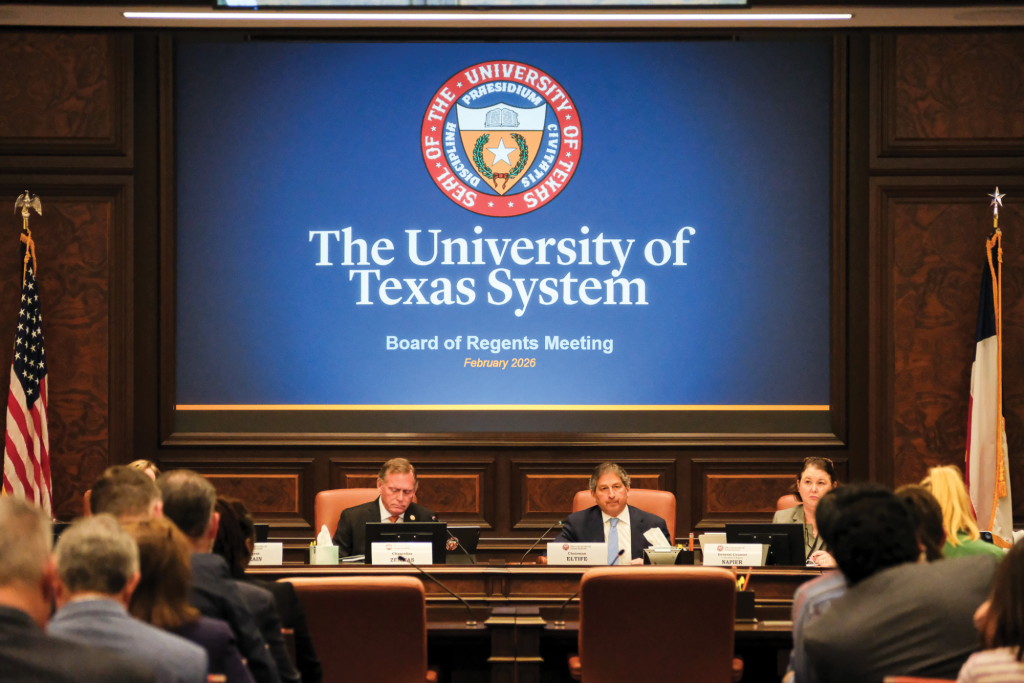
Welcome to The Texan Explains, a weekly news podcast featuring reporters from the news department explaining the biggest stories that are impacting students at the moment. In this episode, I sat down with Senior News Reporter Ashley Paredes as she explained the growth of funding for the Promise Plus program and what the program is in more detail.
Narrated and edited by Rhea Chowdhary. Cover photo by Izabella Hernandez. Music by Blue Dot Sessions.
[Intro music]
Advertisement
Chowdhary: My name is Rhea Chowdhary and I am the Audio Editor for The Daily Texan. The Texan Explains is a weekly news podcast featuring reporters from the news department, explaining the biggest stories that are impacting students at the moment. In this episode, I sat down with Senior News Reporter Ashley Paredes as she explained the growth in funding for the Promise Plus program and what the program is in more detail.
[Intro music]
Chowdhary: First of all, can you explain what the Promise Plus program is and when it was established?
Paredes: The Promise Plus program was established in 2019 and it is essentially a fund designed to provide full tuition coverage, but also tuition support to Texas residents. And so, it was established in 2019, and it is across the UT System, and so at The University of Texas, it is considered the Texas Advance Commitment. And so at UT Austin, when it was first founded, it was a 65 mi- $65,000 requirement. So, if your family makes $65,000 or under, you are given full tuition coverage. So in 2019, they were given a $167 million endowment to start the program, and so over time that has grown, so in 2022, a second endowment was given of 300 million to support the program, to keep the funds going to be able to give this tuition coverage. And that- those two endowments collectively form the Promise Plus program and keep the program funding all these tuitions and stuff. And so last year, an extra $35 million was added. And so, that helped students quickly receive this support and helped up the new eligibility requirements. So last year it was announced that tuition is fully covered for students whose families have an income up to $100,000. And so, to get the tuition support, it is now $125,000.
Chowdhary: Mh-mh
Chowdhary: Now Paredes mentions the Promise Plus program and how it is across the UT System. But what she means by across the UT System is that this program doesn’t just apply to UT, but it applies to schools under the system, including UT Arlington, UT Austin, UT Dallas, UT El Paso, UT Permian Basin, UT Rio Grande Valley, UT San Antonio, UT Tyler and Stephen F. Austin State University, which officially became a member of the UT System in 2023. This means that the budget increase is also money allocated to these schools, but we will see our specific budget increase within the Texas Advance Commitment, which is UT’s specific program for this.
Paredes: It really helps people just like, you know, maybe who don’t have the privilege to afford college. I mean, Texas, you- you are blessed to have such a good in-state school –
Chowdhary: Mh-mh
Paredes: But, everyone wants to go there. It’s really hard to get into and it’s not cheap.
Chowdhary: And what does the budget look like now?
Paredes: They have a total revenue of about $9 billion in 2026, which will increase to about $9.7 billion-
Chowdhary: Wow
Paredes: In 2027. But UT Austin specifically was 4.6 billion in revenue for 2026, increasing to 5.1 billion for 2027. And that’s just the across the board budget.
Chowdhary: Mh-hm
Paredes: And so increased budget means, I mean they’ve got a certain percentage of that budget that goes to scholarships and all different kinds of things. And so when the budget gets increased, so does the funding. And additionally there is that extra endowment. So, it helps just meet the current program requirements essentially. You know, they’ve got all these students who are meeting this $100,000 criteria, a $125,000 criteria and they wanna make sure they can support all of them. So over time they have to get more funding to be able to do so.
Chowdhary: Okay, so they only allocated more money because of just a general budget increase basically?
Paredes: Yes, but in- it was last year when the Texas Advance Commitment increased their funding, so instead of having the minimum for tuition, like full tuition coverage, it was originally $65,000, like, family income. But last year they increased it to a $100,000 minimum. So nowadays, that money is being used to just support that higher number to me. But also, this new funding isn’t directly trying to make that number higher. But, they did discuss making that number higher down the road, but it would require more money too.
Chowdhary: Are there any more like eligibility requirements for this program or what- what are the eligibility requirements?
Paredes: The eligibility is really just being a Texas resident and being a student at UT Austin and then meeting that income requirement. So if your family meets the 100,000, you get full tuition coverage. And then 125,000, you get tuition support.
Chowdhary: When will we see this change happen and be implemented?
Paredes: Um, I believe it should be immediate. I mean, it’s going directly to support the program and the program’s continuous- continuously ongoing. It’s supporting people’s tuition, covering people’s tuition. So it’s just supporting the program.
Chowdhary: Programs such as this exist in other universities across Texas, and have also allocated more money to increase eligibility for students. The Aggie Assurance program had expanded their budget in February 2026 so that families making up to $100,000 would be eligible for free tuition. Their requirements for eligibility are the same as the UT Advance Commitment, such as submitting your FAFSA, being a full time enrolled student and a Texas resident. However, eligibility for renewal differs, with A&M requiring you to maintain a 2.5 GPR, or GPA, while UT requires maintaining a 2.0 GPA. A&M also provides tuition support to students with family income and assets up to $130,000.
Chowdhary: Why is this program so important?
Paredes: In-state tuition is cheaper, but it’s still not cheap.
Chowdhary: Mh-mh
Paredes: And so it really gives people the opportunity to go to college who may not otherwise have it. And so the program supports those people and this new funding to the program is part of like a broader budget increase.
Chowdhary: Awesome. Well thank you so much, Ashley, for joining me and I appreciate you coming out today-
Paredes: Thank you so much.
Chowdhary: For this interview.
[Outro music]
Chowdhary: To listen to more podcasts or read Ashley’s story, visit thedailytexan.com. That’s t-h-e-d-a-i-l-y-t-e-x-a-n . c-o-m. Thank you for listening.
[Outro music]
This story was originally published by The Daily Texan.