Joe Lonsdale: The “Rebel” Billionaire
One of our part-time Austin neighbors, tech tycoon Joseph Lonsdale, recently made national headlines.
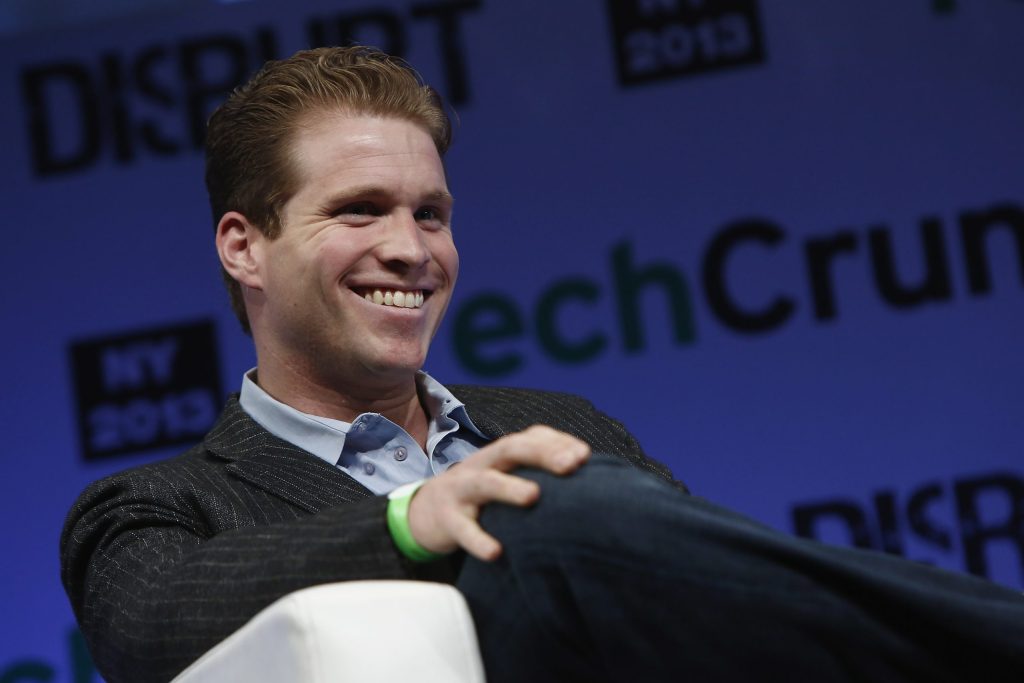
One of our part-time Austin neighbors, tech tycoon Joseph Lonsdale, recently made national headlines. Not just any headlines – simultaneous feature stories in the national newspapers of record, The New York Times and the The Washington Post, and on the same day (Aug. 22). You might chalk that up to an amazing coincidence. More likely, Lonsdale can afford really good press agents.
The nearly 3,000 word Times story is headlined “How a Billionaire Shaped Trump’s Homelessness Policy,” and the even more glowing, 5,000 word Post version is “How one billionaire’s crusade against homelessness became Trump’s playbook.” That’s the news hook for both stories: Through his personal advocacy and his think tank/lobbying group, the Cicero Institute, Lonsdale has campaigned against homelessness, and the Trump administration has been enthusiastically receptive. The Lonsdale campaign used to be a state-by-state lobbying slog: The Post counts 214 laws successfully promoted by Cicero in 29 states since 2021 (the Institute’s own Cicero Action advocacy wing, as of this writing, tallies 195 pieces of legislation “signed into law,” with hundreds more right behind).
As you might guess, the Lonsdale project is less about eliminating homelessness than eliminating the homeless. Last year, Cicero staffers helped draft Trump’s executive order which, under the Trumpian heading, “Ending Crime and Disorder on America’s Streets,” seeks to move federal policy and resources away from the self-explanatory “Housing First” process and instead emphasize law enforcement and “civil commitment” (forced treatment or incarceration) for unsheltered homeless people. Lonsdale celebrated the order, and Scott Centorino, who had coordinated the administration’s homelessness policy, is now a “senior fellow” at Cicero.
The Institute promotes other conventionally conservative, “free market” policies – in health care, public safety, education, and “regulatory reform” – but has made its institutional reputation on homelessness policy. Lonsdale says his focus on that issue was specifically triggered by an incident involving his wife in San Francisco several years ago. She was walking on San Francisco’s Market Street with her child when she was harassed by either “a group of homeless people” (the Post) or “a homeless person” (the Times). The Times reports that in an interview Lonsdale recalled, “She just got screamed at, multiple times, and threatened by someone who has clearly lost their mind.”
As it happens, I was in San Francisco recently and walked a few blocks down Market Street. Indeed, there were quite a few homeless people on the sidewalks, although that morning none of them took any particular notice of me. Certainly anyone who has spent much time on major city streets, in Austin or elsewhere, has occasionally been accosted by an aggressive panhandler, or worse, and it can be frightening (most often for other homeless people). So I have no doubt something like that happened to Ms. Lonsdale.
On the other hand, on Market Street or elsewhere, it never occurred to me because one homeless person treated me rudely, that if I had a magic wand – or a billion dollars – I should devote my money and my political energies to trying to make all homeless people disappear. But Lonsdale credits that incident as one of his motivations for Cicero targeting the homeless, and also for moving with his family from California to Texas (although he maintains a home near Stanford, featured in several flattering photographs in the Post). He complains that public officials in California wouldn’t return his phone calls – but at the Capitol in Austin and now the White House, he has plenty of access to Republican officials eager to entertain his libertarian fancies, and not coincidentally, his campaign donations.
One would think the word “homeless” itself might suggest potential solutions: How can we construct affordable housing sufficient to the need? And in fact, as Housing First proponents report, where the resources have been provided – as in recent years with veterans programs – homelessness has been dramatically reduced. If similar resources, including basic housing, were made available to more people on the street, might fewer find themselves with no other recourse than a tent and a vacant lot?
As Jesse Rabinowitz of the National Homeless Law Center argues (in an online footnote to the Post story), “Laws that make it a crime to sleep outside waste resources, erode trust, and make homelessness worse. None of their backwards ideas address the sky-high cost of rent, which remains the largest cause of homelessness.” By contrast, University of Pennsylvania scholar Dennis Culhane told the Times, when Housing First programs aimed at veterans were sufficiently funded, veteran homelessness dropped by more than half. “If Housing First didn’t work, we wouldn’t have seen that success,” Professor Culhane said. “But outside of veterans, we’re greatly underfunded.”
Nevertheless, bans on homeless camping have been popular, even in Austin. In 2021, local voters approved such a ban (“Prop B”), 57%-42%. Not coincidentally, the Save Austin Now campaign, a thinly disguised Republican operation, spent more than $800,000 promoting the ban, including $40,000 in Lonsdale pocket change and a similar amount from Gov. Greg Abbott’s campaign funds, while ban opponents (Homes Not Handcuffs) raised less than $50,000. Following the vote, once again it became open season on camping, and homeless people without other recourse returned to hiding in the woods or moving around ahead of police sweeps.
The Austin law was soon followed by a similar statewide ban, and Lonsdale and Cicero have gone on to nationwide legislation and federal support for his punitive programs. The administration’s intentions to shift Housing First funding to forced treatment or incarceration is currently in litigation, but should the argument rise to the John Roberts Supreme Court, there’s little doubt how the vote will go. Meanwhile, hospital closings, and federal cuts to Medicaid and nutrition assistance (SNAP) and other social service programs have pretty much destroyed any prospect of substantive attempts to help the country’s most visibly vulnerable people. The Trump priority, embodied in his One Big Beautiful Bill, was tax cuts for the top 10% (or 1%), including billionaires like Joe Lonsdale.
Particularly comical in Lonsdale’s rhetoric is his refrain that he’s an “outsider,” an embattled soldier of the “rebel alliance” fighting “the empire” in defense of “Western civilization.” All this while he and his billionaire allies have a death grip on national and nationwide public policy and resources, in the service of a deranged and malicious emperor whose only goals are self-enrichment and self-aggrandizement. And the most vulnerable Americans will continue to pay most dearly for all this vainglorious destruction.
The Lonsdale/Cicero Institute mantra on homelessness is, “It’s not compassionate to leave people on the street.” Lonsdale’s alternative program is very much like the Trump approach to immigrants: Round them up and make them disappear.
From 2005-2020, now-retired Austin Chronicle News Editor Michael King wrote about city and state politics from a progressive perspective in his weekly column, “Point Austin.” We’re pleased to bring back his column whenever he’s inspired to tackle the state we’re in.
This story was originally published by The Austin Chronicle.