
DNA evidence links man to 2 Austin sexual assault cases from over 25 years ago
DNA evidence led to a man's conviction in two sexual assault cases from over 25 years ago.
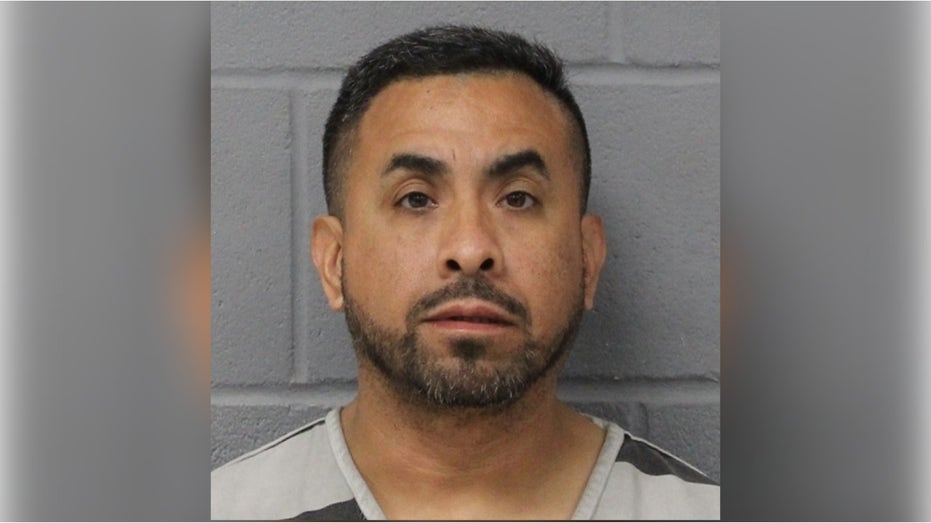
DNA evidence led to a man’s conviction in two sexual assault cases from over 25 years ago.
Michael Lance Gamez received 15 years in prison on August 3 after pleading guilty to one count of attempted aggravated sexual assault in May.
What happened?
In September 1999, a woman was at the Capital Metro Pavilion Park & Ride on Research Boulevard after arriving on a northbound Leander bus.
A man approached her while she was sitting on a bench, and as she got up to walk to a nearby convenience store, he physically assaulted her and then attempted to sexually assault her.
When the woman screamed, the man fled south.
Less than five months later, in February 2000, another woman was returning to her Northgate Boulevard apartment. As she opened the door to her home, a man approached and asked her for help.
She allowed him inside, and he violently attacked and restrained her and tried to sexually assault her. The woman fought back, and the man fled the scene.
APD collected forensic evidence from both scenes.
Identifying the suspect
In April 2000, Texas DPS told Austin police that DNA evidence from both scenes matched the same man. However, the identity of the suspect would remain unknown for more than two decades despite investigative efforts and leads.
In October 2023, APD learned from DPS that the DNA profile had finally been identified as that of Michael Lance Gamez.
In February 2024, detectives were able to find Gamez and obtain DNA from him through a search warrant. That sample was sent to Texas DPS to compare to the evidence collected to confirm the match.
The DNA match was confirmed in October 2024 and the following month Gamez was arrested and charged with first-degree felony aggravated kidnapping, second-degree felony attempted aggravated sexual assault and third-degree felony attempted sexual assault.
“On April 3, 2000, APD received notification from the Texas Department of Public Safety that the DNA profiles from both of those cases matched. While the detectives at the time did not yet have a name, they knew they were looking for the same person in both cases,” said William Costello, APD detective.
“In these cases, DNA served two very important purposes. First, it allowed us to connect two separate sexual assaults to the same unknown person. And years later, advances in forensic technology and DNA databases helped provide us with an identity. We were then able to obtain a known DNA sample and have the laboratory independently confirm that connection,” said Costello.
“These cases have remained unsolved for many years, but we’re never forgotten,” said Carey Chaudoir, special victims investigations commander with APD. “A case may be old, but that does not mean the work stops.”
APD’s handling of sexual assault cases
This discovery was a huge victory for the Austin Police Department, given its history of handling sexual assault cases.
In 2024, City of Austin leaders made a formal apology to victims of sexual assault, after the mishandling of cases by the Austin police department.
In 2018, APD cleared its rape kit backlog, some of which dated back to the 1990s.
Police said there were several reasons for that. In some cases, the victim didn’t want to seek prosecution, in others, a prosecution could be made without DNA.
“We have implemented new policies and procedures within our specific sex crimes unit and all of that combined has really helped bring forward resolutions such as this today,” said Chaudoir.
APD says there are several resources for sexual assault survivors, including limiting consent reporting where they can still have a forensic exam completed at the hospital and can choose if they want to report it to the police.
This story was originally published by Latest & Breaking News | FOX 7 Austin.